Product Description
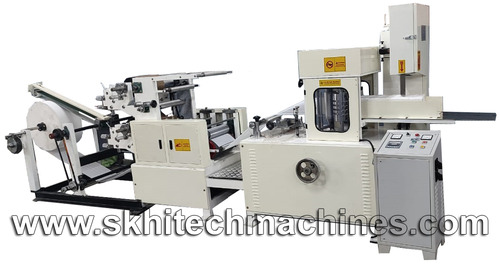
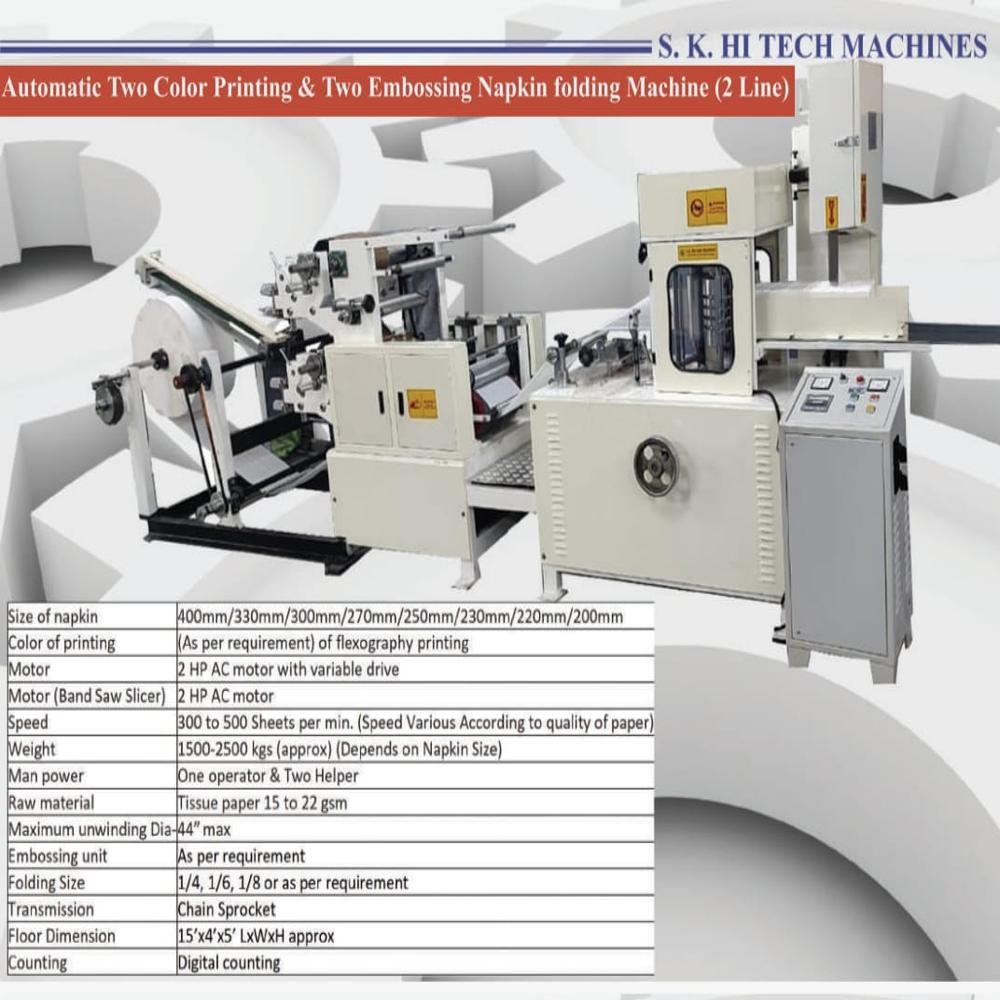
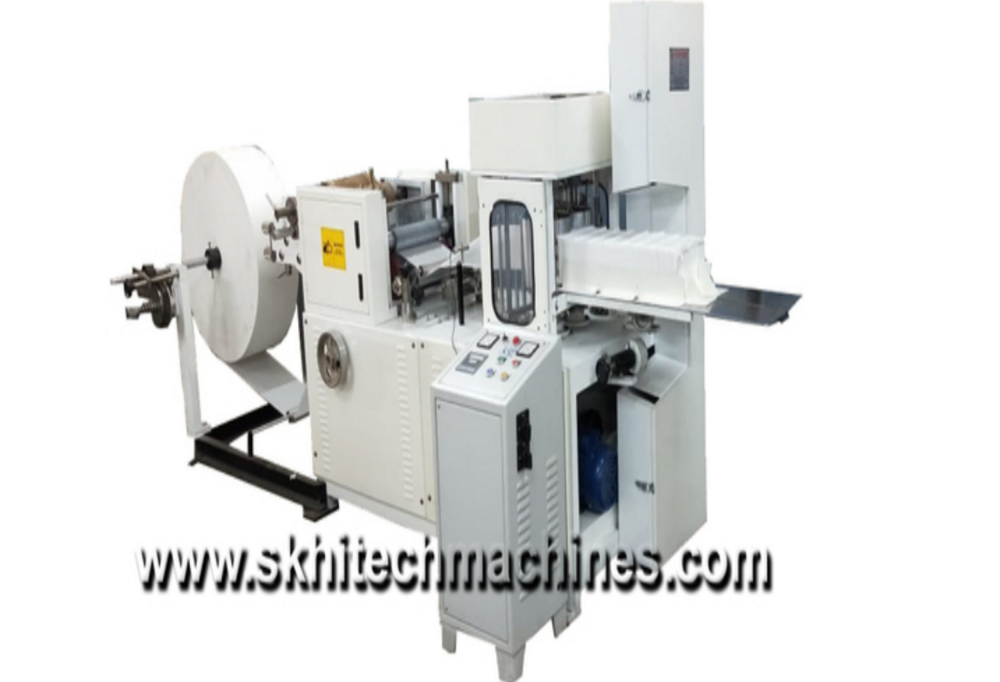
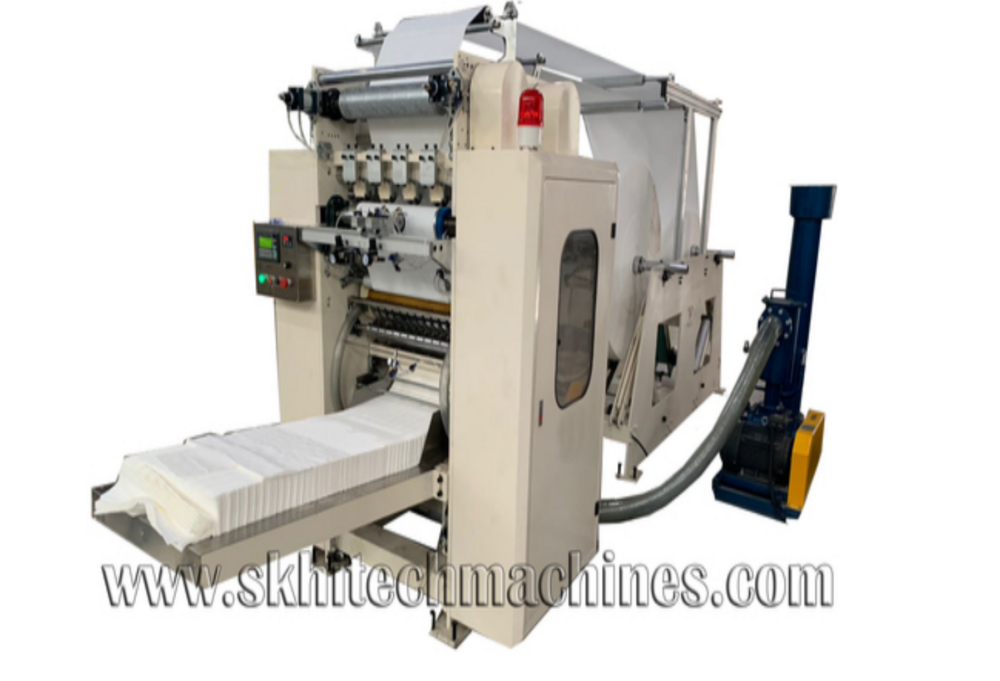
Our Paper Napkin Making Machine is designed to give the right cuts and shape the paper napkins correctly. This semi automatic machine is fitted with the standard AC/DC motors and is endowed with a sturdy chain sprocket system. It handles tissue paper at a rate of 450-550 sheets per minced and it has sections for storing excess tissue papers. Having one 4-color printing unit as well as two embossing printing units guarantees the quality of napkins with bright images. The high-speed Paper Napkin Making Machine works at a voltage of 220-440V and occupies a total weight of 2500kg.
We are manufacturer of Automatic tissue paper making machines which comes with a variety of features aimed at improving efficiency, quality, and sustainability.
- High-Speed Production: Many machines are designed for high-speed production to meet the demands of large-scale tissue paper manufacturing operations.
- Modularity: Modular design allows for easy customization and scalability to accommodate different production needs and product specifications.
- Energy Efficiency: Energy-efficient designs help minimize energy consumption and reduce operational costs. This may include features such as heat recovery systems, optimized drying processes, and efficient motor drives.
- Advanced Controls: Automated control systems optimize machine performance, regulate process parameters, and ensure consistent product quality. This may involve PLC (Programmable Logic Controller) systems, HMI (Human-Machine Interface) panels, and sensors for real-time monitoring and adjustment.
- Integrated Stock Preparation: Some machines feature integrated stock preparation systems, streamlining the process by allowing raw materials to be processed directly within the machine.
- Precision Engineering: Precision-engineered components and assemblies ensure reliable operation, minimal downtime, and long-term durability.
- Creping Technology: Advanced creping systems enhance the softness, bulk, and absorbency of the tissue paper. This may involve adjustable creping blades, controlled creping pressure, and precision creping geometry.
- Quality Inspection Systems: Integrated quality inspection systems detect and reject defective products, ensuring consistent quality and minimizing waste. This may include sensors for detecting defects such as tears, holes, or unevenness in the paper.
- Roll Handling and Packaging: Automated roll handling systems facilitate efficient winding, cutting, and packaging of finished tissue paper rolls. This may include automatic reel changers, slitting units, and packaging machines.
- Safety Features: Safety interlocks, guards, and emergency stop systems ensure operator safety and compliance with industry standards.
- Environmental Considerations: Some machines incorporate features for environmental sustainability, such as water recycling systems, emissions control technologies, and use of eco-friendly materials.
- Remote Monitoring and Diagnostics: Remote monitoring and diagnostics capabilities allow operators to monitor machine performance, troubleshoot issues, and perform maintenance tasks remotely, improving overall efficiency and uptime.
Advanced Automation for Efficient ProductionThis machine utilizes a PLC or VFD drive, which simplifies operation while ensuring consistent quality. Its fully automatic grade accommodates high-speed industrial demands, allowing continuous production without manual intervention. With a working speed of 33,000 pieces per hour, downtime is minimal, facilitating seamless workflow.
Versatile and Sturdy Industrial DesignConstructed with mild steel and finished in white, the machine is built for durability and long-term use in demanding environments. Supporting both tissue and poly napkin production, it suits various industrial applications. Its dimensions (15x4x5 ft) offer a compact footprint, making it suitable for different workspace layouts.
User-Friendly Operation with Precision ControlThe integrated Human Machine Interface and PLC system streamline machine control, providing real-time monitoring and adjustments. The absence of a lubricating or cooling system reduces maintenance, while the accuracy and performance meet requirement-based industrial standards.
FAQ's of Paper Napkin Making Machine:
Q: How does the Paper Napkin Making Machine operate automatically?
A: The machine uses a PLC (Programmable Logic Controller) and a Human Machine Interface to automate the entire napkin-making process. Once set up, it accurately handles feeding, cutting, folding, and counting napkins without manual intervention.
Q: What materials and products can be processed with this machine?
A: Primarily constructed from mild steel, the machine is capable of processing paper tissues, napkins, and poly materials, making it highly versatile for various industrial napkin products.
Q: Where is this machine best suited for use?
A: This napkin making machine is ideal for industrial environments, such as large-scale manufacturing units, exporters, and suppliers. Its robust construction and production speed make it suitable for demanding production lines.
Q: What is the production capacity and accuracy of the machine?
A: The machine boasts a capacity of 550 pieces per minute, with working speeds up to 33,000 pieces per hour. Accuracy is maintained based on requirement standards, ensuring uniformity and quality in every output.
Q: When should maintenance be performed on this machine?
A: Since the machine lacks a built-in lubricating or cooling system, routine external checks are recommended. Maintenance should follow manufacturer guidelines or production cycles to sustain optimal performance.
Q: What are the connectivity and power requirements?
A: The machine operates on electricity with standard voltage options of 220V or 380V at 100 Hz frequency. It features VFD or PLC drive for efficient power management, suitable for Indian industrial settings.
Q: What benefits does this machine offer over manual production?
A: Fully automatic operation reduces labor, increases consistency, and boosts productivity. Its computerized system ensures precise handling and maximizes efficiency, making it highly beneficial for high-volume manufacturing.








 Send Inquiry
 Send Inquiry
 Send SMS
 Call Me Free


